
Healing in the Present: Concepts and Skills

Welcome! This short video series was made to support to my clients, and their Nervous Systems, as we step into the gritty work of healing and trauma recovery. The mini lessons are educational, practical, embodied, and created to build competence, groundedness, and hope. So, please stay a while, reflect, and let me know what you learn. -Kristin

Together we’ll explore how difficult experiences impact our systems and how to use lifestyle factors and mindful presence to support healing and build your coping skill and self-care tool kit.

What to expect:

  • 45 minutes of content broken down into 12 short and condensed videos with accompanying written highlights, journal prompts, and practices.

  • Lessons on the Nervous System, Emotional Awareness, Unconscious Learnings, Mindfulness, and Lifestyle Factors that support healing.

  • Coping skills, guided meditations and practices, downloadable outline and journal pages, and practical applications of the material.
Skip to Videos
  • Body: Nervous System & WOT (Video 8/12)

    Takeaway: Hard experiences change how our system responds to stress and threat. Lifestyle changes and direct practice offer immediate regulation and widen your Window of Tolerance for long term change.

    Why it matters: When we are inside our Window of Tolerance we are able to respond appropriately to challenges and we can shift into more relaxed states that allow our bodies to digest our food and connect to our people.

    ‘Regulation’ & ‘Resourcing’ are other therapy specific terms that often describe coping skills that aim to soothe your nervous system or bring it back to it’s optimal state.

    Regulating Practices (4:53)

    • Box Breathing or stretching out inhales/exhales

    • Progressive Muscle Relaxation

    • Noticing cues of safety

    • Self Touch: right hand over heart, left hand under right armpit, intentional breathing

    • Spend time in nature

    • Sound therapy: Nature and water sounds, binaural beats

    Tip: Different tools are often needed or preferred for different times or different states.

    Journal & Thought Prompts: Explore how your nervous system feels when you’re in your window of tolerance, in hyperactivation, or hypoactivation? Start to think about what tools may fit best for your different nervous system states. Where can you “plug” a practice into daily life?

    “A healing goal is to widen our nervous system’s tolerance for stress so that we can respond more appropriately to life situations.”

    Additional Resource:

    Polyvagal Card Deck: 58 Practices for Calm and Change

  • Heart: Emotional Awareness & Feeling Our Feelings (Video 9/12)

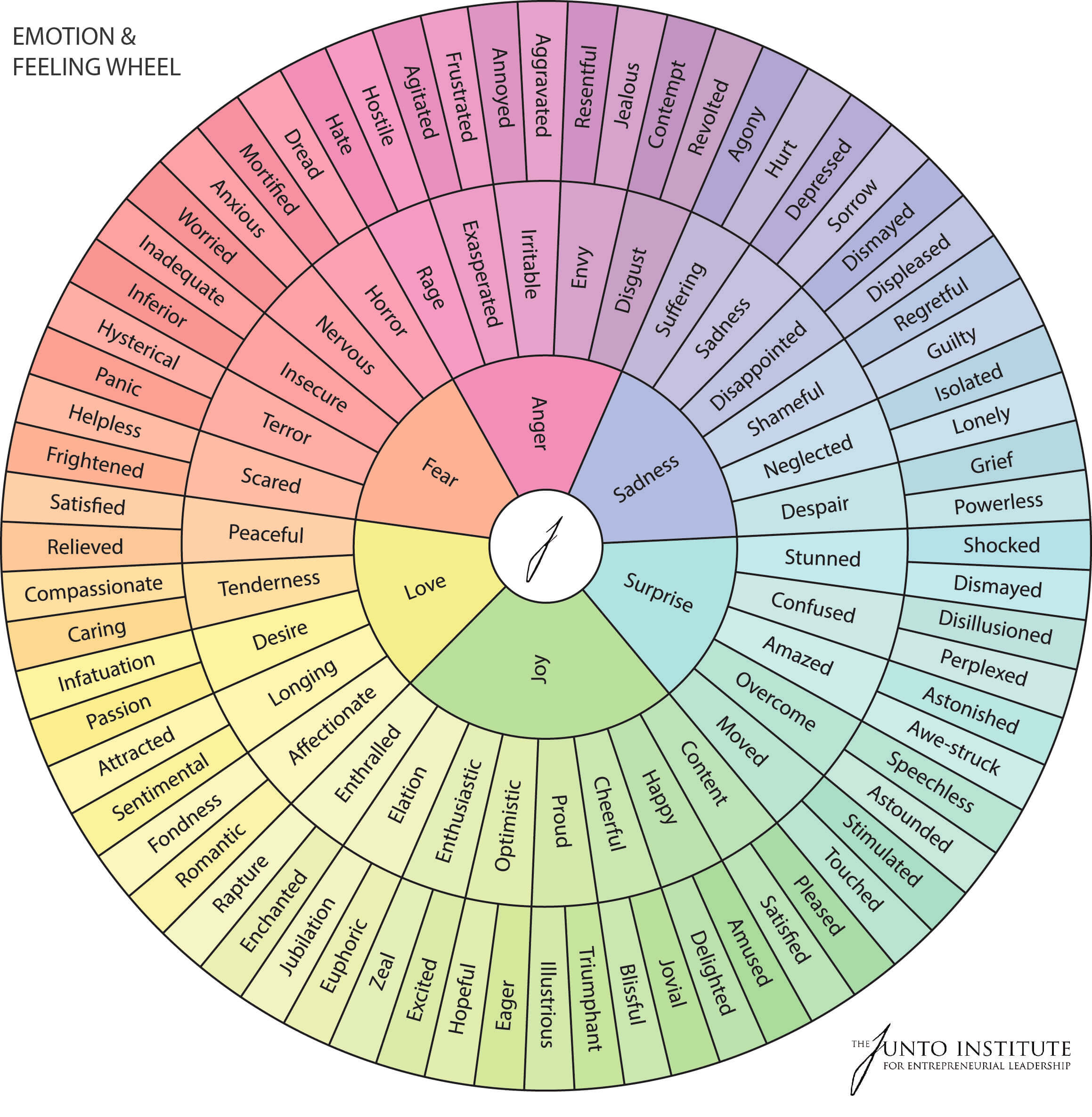
    Takeaway: Connecting to our feelings, understanding them, and accepting them is necessary in healing unresolved experiences and living fully. “Processing” Emotion Steps: (1) Notice (2) Name (3) Understand (4) Soothe/Move

    Practice (1:11): SEAT, name Sensation, Emotion, Action, Thought

    Journal & Thought Prompts: How would you describe your relationship to your emotional world? How do you tend to “feel your feeling”? How were emotions expressed growing up? What was your experience in the exercise?

    “Practices from the previous video and the SEAT exercise help us feel our feelings in a structured and manageable way.”

    Resource: Feelings Wheel in Color

  • • 11/10/23

    Heart 2: Self-Compassion (Video 10/12)

    Takeaway: Feeling and understanding our emotions gives us access to self compassion. Self compassion is more effective toward change than self-criticism and can ‘soothe’ our systems.

    Practice (1:16): With a hand on your heart and a deep breath, say: “This is a hard moment, suffering is a part of life, may I be kind to myself in this moment, may I give myself the compassion I need.”

    Journal Prompts: Craft your own self compassion mantra or template. Remember to name the experience that is difficult, name a reality of our common humanity, and bring in kind and mindful awareness.

    “Self compassion is how we honor our emotions and honor our humanity.”

    Additional Readings

    Self Compassion, Kristin Neff, PhD

    Web Resource: Self Compassion Exercises

  • • 11/11/23

    Brain: Unconscious Learnings (Video 11/12)

    Takeaway: Our brains overgeneralize and apply learnings to many situations. Trauma brings us to the past and we view current moments from past lenses. Practicing presence brings us to the now and allows us to take in new information that leads to healing and change.

    Action: Understand your history and patterns. Talk to a trusted family member or friend about early life context.

    Practice (3:50): I'm in Memory, Hand on heart, say to self, "This situation reminds me of what I experienced in the past when ____________." Follow with favorite self compassion statement. (Exercise taken from Unlocking the Emotional Brain by Bruce Ecker.)

    Journal & Thought Prompts: What do you already understand about your history and patterns? What have you learned through your experiences that is no longer true? Is there an outside perspective who can help here?

    “By becoming present - we can start to train our brain to notice that things are different now - these can be tiny moments of healing.”